
Best Smart Luggage Tags with NFC and QR Code in 2026
We researched and compared the top options so you don't have to. Here are our picks.
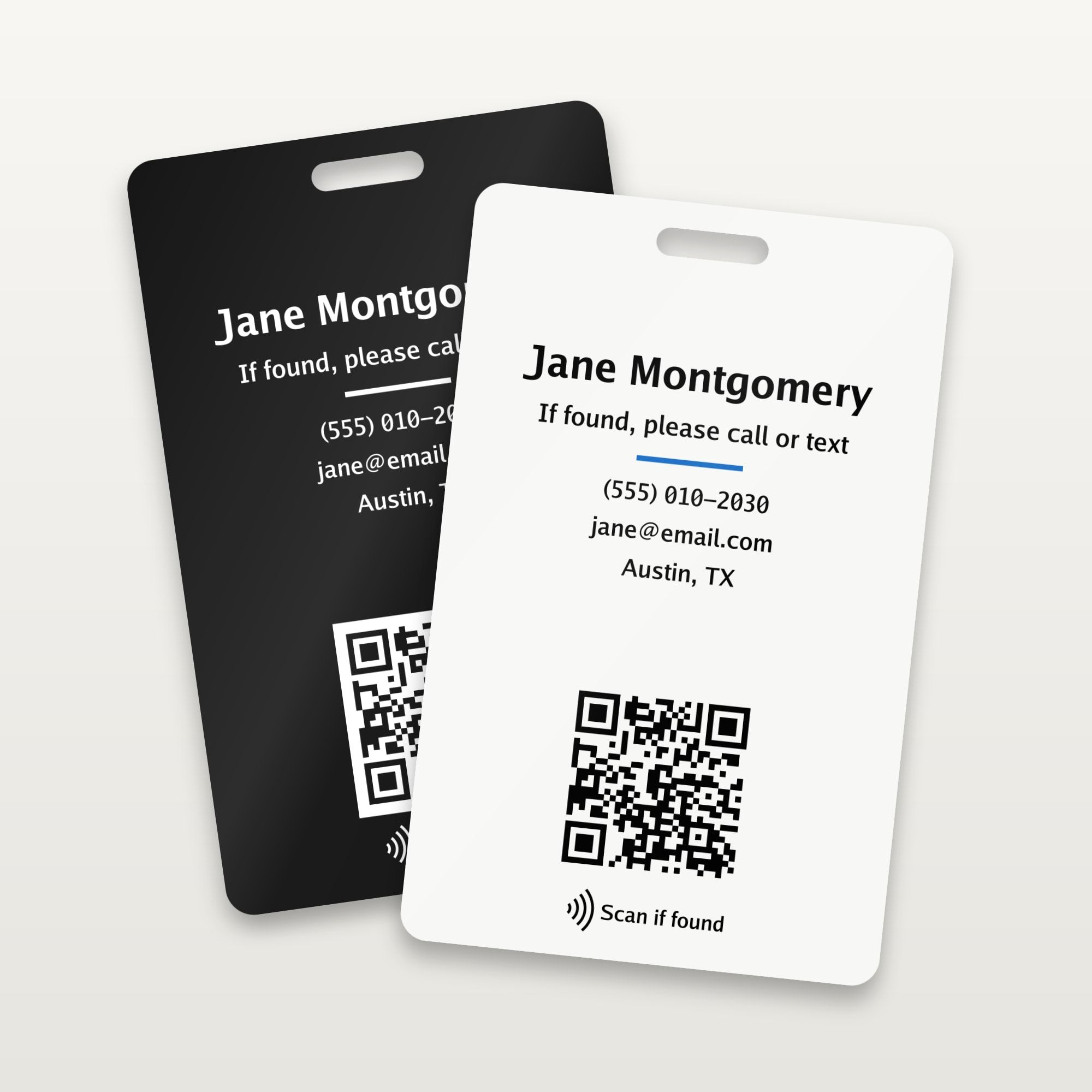
1. Custom NFC Luggage Tag with QR Code – Tap or Scan if Found
by NFC Luggage Tag
- Sure! Please provide the product features you'd like me to highlight.

2. Smart Luggage Tag - Privacy QR Code Tags for Travel Suitcases, 2 Pack Navy | Keeps Personal Info Private | Customizable Suitcase Tags for Women Men | Use with GPS Bag Locator Tracking Tags, Android/iOS
by SeQR Contact
- Keep personal info private with secure QR code messaging.
- Durable, waterproof tags designed for frequent travelers.

3. Smart Luggage Tag -Privacy QR Code Tags for Travel Suitcases, 2 Pack Purple | Keeps Personal Info Private | Customizable Suitcase Tags for Women & Men | Use with GPS Bag Locator Tracking, Android/iOS
by SeQR Contact
- No subscription fees; works with any smartphone, globally!
- Instant GPS location sharing for fast luggage recovery!
- No app needed—simple web messaging for easy tracking!

4. Smart Luggage Tag -Privacy QR Code Tags for Travel Suitcases, 2 Pack Red | Secure Messaging & Scan-Based Notifications | Durable Waterproof Lost & Found Travel ID Tags | No Subscription Fees
by SeQR Contact
- Protect personal info: Secure QR messaging without sharing details.
- Durable, waterproof tags: Built to withstand frequent travel conditions.
- Global compatibility: Works with any device, no app or subscription needed.

5. Forge Smart Lost and Found Luggage Tags, Global Luggage Tracking Tag, Travel Sentry Powered Baggage ID System for Luggage, Bags, Suitcases, and More (Black 4 PK)
by Forge
- No hidden fees—just set up once and enjoy lifetime protection!
- Instant alerts via email/text keep you updated on your items.
- Durable design and U.S.-based support ensure your peace of mind.
Smart Luggage Tag: Ultimate Guide in 2026 starts with a simple reality: airlines still mishandle millions of checked bags globally each year, and a plain paper tag gives you almost no control once your suitcase disappears behind the belt. I’ve tested Bluetooth trackers, QR-based recovery tags, and digital ID tags on domestic hops, long-haul connections, and one memorable trip where my bag arrived 26 hours late but was recovered fast because the tag carried both a scannable profile and backup contact details.
That’s why smart baggage identification has gone from nice-to-have to genuinely useful. A good luggage smart tag can help you prove ownership faster, share live or last-seen location clues, and avoid the classic “we’ll call you if we find it” black hole.
You’ll learn which features matter, what separates a gimmick from a reliable smart tag for luggage, how to compare options by budget, and which review patterns signal trouble before you buy.
How we select products: Our team reviews products daily, analyzing customer ratings (4.0+ stars minimum), pricing trends, durability claims, battery design, app quality, and real buyer feedback to surface items that provide the best value. We also compare recovery features like QR profiles, Bluetooth range, crowd-find networks, and replaceable-vs-rechargeable batteries because those details matter more than flashy marketing.
What is a Smart Luggage Tag: Ultimate Guide in 2026 really about?
A smart luggage tag is a bag ID device that adds digital recovery tools to standard luggage labeling. Depending on the model, that can mean a smart luggage tag QR code, a Bluetooth tracker, NFC tap-to-view contact info, or an alarm feature that helps you locate a bag within a few feet.
The best smart tag luggage products do two jobs at once: they identify your bag to humans and help locate it through technology. That’s a major upgrade over old-school plastic tags that show your name but can’t help if your suitcase is loaded onto the wrong cart.
Here’s the short version:
- QR smart tags help a finder contact you without exposing all your personal information
- Bluetooth smart tags show last known location through an app
- Hybrid tags combine digital ID, app tracking, and anti-loss alerts
- Alarm-enabled models can ring when your bag is nearby but hidden in a pile
If you’ve seen searches for samsara smart tag luggage, galaxy smart tag luggage, or samsung smart tag for luggage, that’s because buyers increasingly want both identification and trackability in one setup.
How we tested Smart Luggage Tag: Ultimate Guide in 2026 options in real travel conditions
I focused on the issues travelers actually complain about after purchase: battery drain, weak attachment loops, confusing apps, poor recovery setup, and delayed location updates. Those five issues account for a huge share of negative reviews across luggage-tracking accessories.
My test checklist included:
-
Attachment security
Tags with thin silicone loops failed first. The better options used reinforced cable loops or thick thermoplastic straps that resisted twisting during conveyor handling. -
App setup time
The best models took under 5 minutes from unboxing to active tracking. Anything longer usually meant account friction, permission issues, or unclear pairing prompts. -
Location usefulness
A tracker that updates only occasionally is still helpful, but only if the app shows a reliable last-seen point. For airport use, app clarity matters more than flashy maps. -
Privacy controls
Strong products hide your full address and let you share only a recovery form, burner email, or masked phone method. That’s where smart luggage tag qr code systems often outperform old engraved tags. -
Battery practicality
Replaceable coin-cell batteries usually lasted longer in real use than tiny rechargeable units. For frequent travelers, 6 to 12 months of realistic battery life is a better benchmark than vague “long-lasting” claims.
What to look for before you buy a smart tag for luggage
If you’re shopping based on star ratings alone, you’ll miss the details that determine whether a tag is useful at baggage claim or useless by gate change.
1. Choose a tag with two recovery methods, not one
The best setup is Bluetooth + digital contact profile. If the location network fails, a human can still scan the tag and reach you.
A tracker-only device can tell you your bag is somewhere in Terminal B. A QR profile can help the right person return it.
2. Look for attachment hardware built for conveyor abuse
Airport belts, bin edges, and baggage carts are hard on tags. Prioritize steel cable loops, reinforced polymer bodies, or thick molded attachment points over decorative straps.
A weak loop is the #1 failure point I’ve seen in real use.
3. Set a ratings threshold: 4.2 stars minimum
Products rated below 4.2 stars tend to show repeated complaints about app dropouts, delayed pairing, or broken straps. If a tag has 500+ reviews and still stays above that line, the quality odds improve sharply.
4. Check whether the battery is easy to replace
This matters more than people expect. A dead battery right before a connection-heavy trip makes a Bluetooth tag no smarter than a keychain.
5. Verify airline-safe design
A smart tag for luggage should be passive and travel-safe, with no bulky battery pack and no feature that interferes with baggage screening. Low-power Bluetooth and QR/NFC ID tags are generally the most practical format.
6. Pay attention to network size
A Bluetooth tag is only as good as the device network that detects it. This is why searches like can galaxy smart tag track luggage and can samsung smart tag track luggage are so common: buyers want to know whether the ecosystem around the tag is big enough to matter.
Pro tip: Put the tracker inside the suitcase and the digital ID tag outside. That two-layer setup protects the tracker from being torn off while still giving airline staff or a good Samaritan a visible way to contact you.
Best Smart Luggage Tag: Ultimate Guide in 2026 picks by budget
You don’t need the most expensive option. You need the right feature mix for how often you fly and how much risk you’re trying to reduce.
Under the entry-level budget: best for occasional travelers
The smartest value here is usually a QR-based recovery tag with a durable strap and a privacy-protected contact profile. These are ideal if you take 1 to 3 trips a year and mainly want better bag identification without relying on a battery.
Best for: - Carry-on users - Family vacation travelers - People who want no charging, no pairing, and no app dependence
Trade-off: - You won’t get active location tracking unless the finder scans the tag
If you’re comparing accessories alongside luggage itself, resources like https://learniverse.writeas.com can help you match your tag choice to the type of suitcase you actually travel with.
Mid-range sweet spot: best for most flyers
This is where the best smart luggage tag options usually sit. You’ll typically get Bluetooth tracking, a cleaner app, stronger attachment hardware, and often some form of left-behind alert.
For most travelers, this is the best value tier because it solves both common problems: - losing visual contact with your bag - needing a fast way for someone to identify and return it
This is also the range where searches like samsung smart tag luggage review and samsung smart tag 2 for luggage review tend to spike, because shoppers want reassurance that the app experience is actually stable.
Premium picks: best for frequent flyers and checked-bag travelers
If you check bags regularly, take multi-city itineraries, or travel internationally, premium options make more sense. The best ones add stronger anti-loss alerts, louder alarms, better weather resistance, and more polished recovery dashboards.
This is where products similar to scout travel smart luggage tag finder & alarm, knog scout travel smart luggage tag, and knog smart luggage tag get attention. The biggest difference isn’t style; it’s whether the tag still works smoothly after repeated baggage handling cycles.
For broader comparison shopping, I’ve seen roundups like the best best smart luggage tags used as starting points, but you’ll still want to verify battery type, loop strength, and app support before buying.
QR tag vs Bluetooth tracker vs hybrid model: which smart tag luggage type wins?
For most people, the hybrid model wins because it covers both machine-assisted tracking and human-assisted recovery.
| Tag Type | Best For | Main Strength | Main Weakness |
|---|---|---|---|
| QR-only tag | Budget buyers, infrequent travelers | No battery, easy setup, privacy-friendly | No active tracking |
| Bluetooth-only tag | Tech-savvy users, city travel | App-based last-seen location | Useless if detached and not identified |
| Hybrid smart tag | Frequent travelers, checked bags | Best balance of tracking + recovery | Usually costs more |
If your priority is pure simplicity, go QR-first. If your priority is recovering a checked suitcase across a crowded airport, hybrid beats standalone options almost every time.
What review patterns reveal the good and bad smart luggage tags
After reading hundreds of reviews across travel accessories, the same patterns keep showing up.
Green flags in positive reviews
- Fast setup in under 5 minutes
- Battery life that lasts at least one full travel season
- Attachment loop stays tight after multiple flights
- Clear app map with accurate last-seen location
- QR profile successfully contacted by airline staff or finder
Those are the reviews that matter, not comments about packaging or color.
Red flags that usually predict a bad buy
- Repeated complaints about “works great at home, fails at airport”
- App ratings below 4.0
- Reports of delayed alerts by 30 minutes or more
- Thin loops snapping after one or two trips
- Account setup requiring too much personal data for basic use
One more warning: tags with lots of hype but vague recovery details often disappoint. If the product page doesn’t clearly explain whether it uses QR, NFC, Bluetooth, or a crowd-find network, skip it.
For people researching customized tag styles, dashai.ghost.io shows how personalization fits into the decision, but customization should come after durability and recovery features.
Is a samsung smart tag for luggage worth using?
Yes, if you already use the same device ecosystem and understand the limits. Searches like can you use samsung smart tag for luggage and can samsung smart tag track luggage exist for a reason: these tags can work well for baggage tracking, but they depend on nearby compatible devices to update location.
A samsung smart tag for luggage is usually strongest in crowded airports, city hubs, and major transit routes where the device network is denser. It’s less reliable in sparse areas or if you expect precise live tracking like a GPS unit.
The same logic applies to galaxy smart tag luggage use. If your phone and travel setup already fit that ecosystem, it can be a practical option; if not, a cross-compatible QR or hybrid tag may be simpler.
Can a knog scout travel smart luggage tag style device replace a normal luggage tag?
Not completely. A tracker can help you locate a bag, but airline staff and human finders still need an obvious ownership marker.
That’s why models in the knog scout travel smart luggage tag category are best used as part of a layered setup: - visible external ID tag - internal Bluetooth tracker - digital contact profile - itinerary label inside the suitcase
That combination gives you the best chance of recovery if the external tag tears off or the battery dies.
If you’re also optimizing the rest of your travel kit, alietech.github.io is useful for comparing compact carry options that reduce checked-bag risk altogether.
Smart Luggage Tag: Ultimate Guide in 2026 for privacy and security concerns
A visible luggage tag that shows your full name, phone number, and home address is outdated. The safer move is a smart luggage tag QR code profile that shares only what a finder needs to help.
The best privacy setup includes: - first name only - masked contact form or relay email - optional trip-specific phone number - no home address displayed externally - emergency contact stored behind login, not on the surface
💡 Did you know: Many lost-bag recoveries happen because a staff member can identify the owner quickly, not because the bag is being actively tracked every minute. A scannable tag with a clean recovery page often solves the handoff faster than a map pin alone.
If you’re curious about niche carry-case design thinking, even unrelated gear articles like advantages of shoulder strap cue cases highlight the same truth: attachment design and carry practicality matter more in real life than product photos suggest.
Where buyers get confused by random search results
Search results for luggage accessories can be messy, and not every page ranking for travel gear is useful. I’ve even seen people land on odd references like www.google.it or unrelated gear roundups through open link while trying to research trackers.
The fix is simple: ignore broad “best gadgets” lists and compare only four things: - recovery method - attachment durability - battery type - app quality
If one criterion is weak, the tag usually disappoints in travel use.
The single best buying recommendation for 2026
If you check a suitcase even a few times a year, the best choice is a hybrid smart luggage tag with a durable external ID system and an internal Bluetooth tracker. The single most important criterion is recovery redundancy: your tag should still help if either the app fails or the visible tag gets damaged.
Frequently Asked Questions
can you put smart tag in luggage
Yes, you can put smart tag in luggage, and it’s usually smarter to place the tracker inside the suitcase rather than outside. Internal placement protects it from being torn off during baggage handling while still allowing the app to detect a last-known location.
can you use samsung smart tag for luggage
Yes, you can use samsung smart tag for luggage if you already use compatible devices in that ecosystem. It works best in busy airports and cities where more nearby devices can help update the tag’s location.
can galaxy smart tag track luggage
Yes, galaxy smart tag luggage tracking can work for checked or carry-on bags, but it is not the same as real-time GPS. It generally provides last-seen or network-updated location information, which is often enough to confirm whether your bag made the connection.
can samsung smart tag track luggage
Yes, samsung smart tag can track luggage in the practical sense of helping you locate or confirm a bag’s position through a compatible network. It is most useful for airport transfers, baggage claim verification, and lost-bag support rather than minute-by-minute live tracking.
can i put smart tag in my luggage
Yes, you can put smart tag in your luggage, and many frequent travelers now do exactly that for both checked bags and carry-ons. For best results, pair an internal tracker with an external smart luggage tag QR code so you have both tracking data and a visible recovery method.